Shafer Vineyards
Napa Valley Wines
HomeStoryWinesVineyardsNewDownloadsFAQContactTrade

Shafer wines photo

  • Visiting Shafer
  • Accessing Our Wines
  • Enjoying our Wines
  • Mail List Questions
  • Hillside Select
  • Misc.

Frequently Asked Questions

Is Shafer open for tours and tasting?
Tasting visits are by appointment only. We host 10 or fewer guests for a relaxed, sit-down tasting once in the morning and once in the afternoon on weekdays (closed weekends and holidays.) The tasting visit is $45 per guest. For complete information please click here to view our tasting visit section.

When is the winery open?
Shafer is open for retail sales Monday through Friday from 9 a.m. to 12 noon and from 1 to 4 p.m. We are closed weekends and holidays. Wines are tasted by appointment only.

Where is Shafer located?
Shafer is located at 6154 Silverado Trail, on the east side of the Silverado Trail, about seven miles north of Napa and 3/4 of a mile south of the Yountville Cross Road. Distance from San Francisco to Napa is approximately 50 miles. Click here for a map.

Why don’t I see a Shafer sign on the Silverado Trail?
It comes down to one of our basic beliefs about wine – that it is best enjoyed in small, convivial groups. That’s the central reason why we only offer tasting visits by appointment to a limited number of guests per day. Putting up a sign would give the false impression that we’re ready to pour tastes of wine for the thousands who travel down Silverado Trail each week.

Frequently Asked Questions

How can I get on your mailing list?
Shafer maintains two direct mail lists: one for Hillside Select and one called our “Napa Valley list,” which offers the other wines in our portfolio. Regrettably, the Wait List for Hillside Select mailing list is currently closed. If you would like to be notified when the Wait List will reopen, please click here.

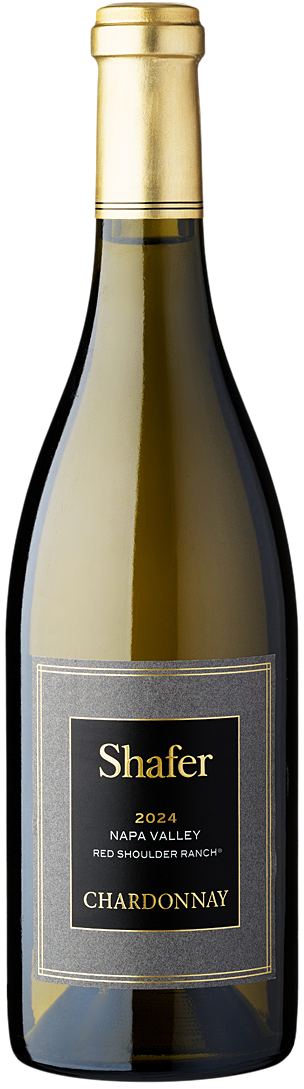
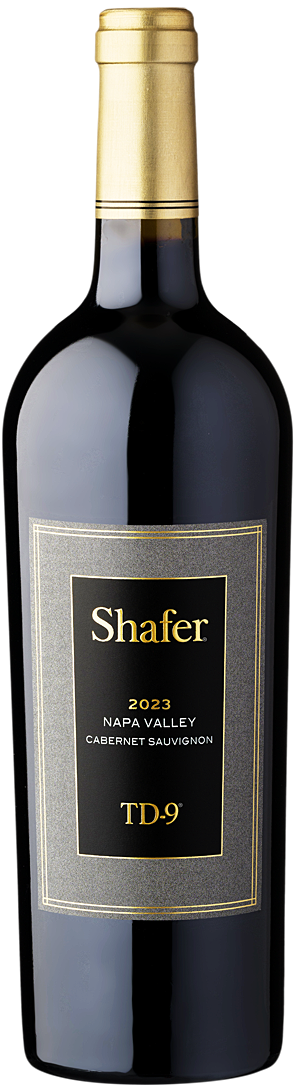
The “Napa Valley” which makes available Red Shoulder Ranch Chardonnay, Merlot, One Point Five Cabernet Sauvignon and Relentless is currently open. To sign up for the Napa Valley list, please click here.


How can I locate Shafer wines in my area?

Do you ship your wine?

Yes, to those whose names are active on one or both of our mailing lists or who purchase wine at the winery and live in states to which such shipments are legal. That list currently includes Alaska (wet counties only), California, Colorado, Connecticut, District of Columbia, Florida, Georgia, Hawaii, Idaho, Illinois, Iowa, Kansas, Maine, Michigan, Minnesota, Missouri, Nebraska, Nevada, New Hampshire, New Mexico, New York, North Carolina, Ohio, Oregon, South Carolina, Texas, Virginia, Vermont, Washington, Wisconsin, and Wyoming.

The direct shipping issue continues to change as more and more states pass related legislation. Up-to-date information is available at www.freethegrapes.org.

Frequently Asked Questions

How long can I age my Shafer wines?

Approximate number of years from vintage date Shafer considers optimum:

Optimum drinking Length of Aging
Red Shoulder Ranch® Chardonnay Release - 5 years
Merlot Release - 8 years
Napa Valley Cabernet Sauvignon Release - 10 years
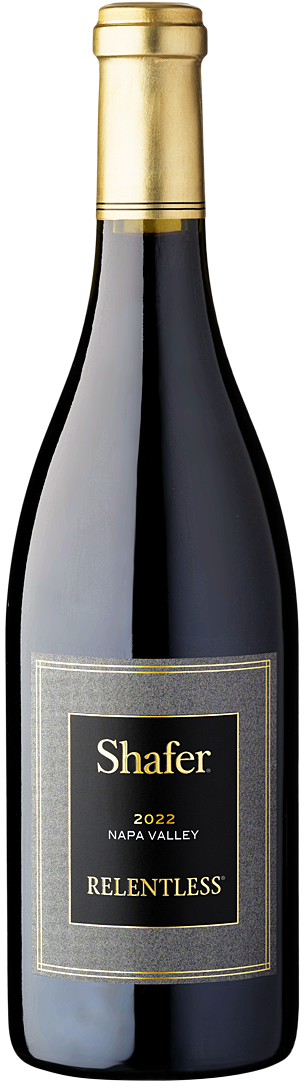
Relentless® Release - 15 years
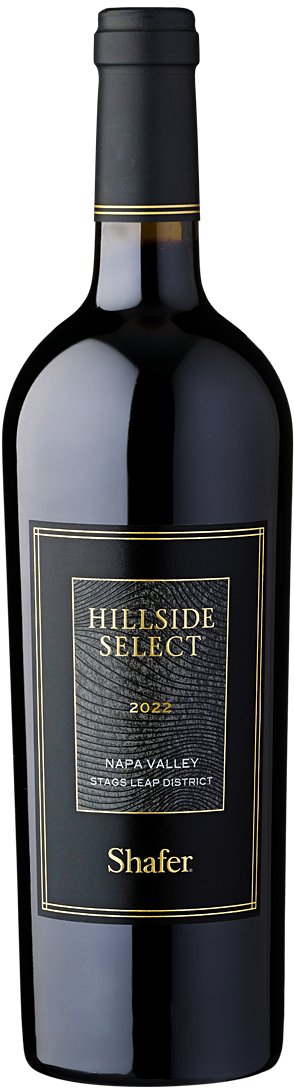
Hillside Select® Cabernet Sauvignon Release - 20 years

Click here for the complete Hillside Select tasting notes.

Wines in larger format bottles age more slowly. Remember, all of Shafer's wines are made to be immediately drinkable upon release.


What’s the difference between Hillside Select and One Point Five?
Hillside Select is produced entirely from Cabernet Sauvignon fruit selected from vineyard blocks on the hillsides that surround the winery. One Point Five is sourced primarily from two Stags Leap District sites – the hillside estate vineyards and Shafer’s “Borderline Vineyard” located about two miles south of the winery. The two wines also diverge in terms of barrel regime and blend. Hillside Select ages three years in new French oak and is 100 percent Cabernet Sauvignon, while One Point Five ages 20 months in 65 percent new oak, half of which is French and half is American, and includes two percent Petite Verdot.

What does the name One Point Five mean?
It’s meant to convey the importance of the father and son partnership that is the core of Shafer Vineyards. The family business story you hear most often is the second-generation tale, where a parent hands an established, profitable business over to a son or daughter. Things happened a little differently here. John started the winery in 1978 and released the first wine in 1981. Doug joined as winemaker just two years later. They have worked so closely together for so long. we call our story “a generation and a half.” The One Point Five name plays off of that idea. This label is meant as a tribute to our commitment to family business and also to Stags Leap District, our home of more than 30 years.

Is One Point Five available in 1.5 liter bottles?
While it might seem a natural to offer One Point Five in magnums, it will be available only in 750 and 375 ml bottles. That’s because the name focuses on the importance of family partnership rather than bottle size.

Where did the name Relentless come from?
We wanted to honor Elias Fernandez, our winemaker of more than 20 years, and his relentless pursuit of quality in winemaking. No detail is too small. On bottling days he personally steam cleans every fitting and every hose that comes in contact with the wine. He inspects every oak barrel and mandates ultra high-quality from all our suppliers. To maintain quality in our corks he worked meticulously with our supplier to re-invent every step a cork makes from the cork forests of Portugal to their arrival on our doorstep. Our suppliers describe Elias as “disciplined,” “focused,” “extraordinarily organized,” “pain in the neck” and “very demanding.” In other words, relentless. This wine is liquid testimonial to the skill and style of Winemaker Elias Fernandez.

When Shafer created the blend for Relentless (80% Syrah, 20% Petite Sirah), was it based on another wine or the wines of another region?
The blend for Relentless is an original recipe. We didn’t look to the wines of, say the Rhone Valley, or of Australia. Relentless grew out of our growing appreciation for Syrah’s versatility – it can be produced in a wide range of styles. We also knew that Petite Sirah produced a big, rugged wine here in the Valley, because it was the grape predominantly used by many of the old Italian grapegrowers when they made wine at home for themselves. Doug Shafer and Elias Fernandez thought that bringing together the noble varietal, Syrah, and its more rustic cousin, Petite Sirah, would make a delicious blend.

How did you come up with the name Red Shoulder Ranch?
The name is meant to honor our partners in the vineyard, who control the populations of moles and gophers – flying predators such as Red Shouldered Hawks, Red Tailed Hawks, American Kestrels, Golden Eagles and Barn Owls. As part of our 20-year commitment to sustainable agriculture we’ve erected hawk perches and owl nesting boxes to provide places from which these raptors can hunt the rodents who would otherwise eat young vine roots.

Does Shafer’s Chardonnay go through malolactic fermentation?
No. To preserve the wine’s natural acidity and true varietal character, our Chardonnay only undergoes primary fermentation in individual barrels. To achieve softness in the mouth, the wine ages on the lees.

What is wild yeast?
Wild yeast, or native yeast, grows naturally in the great out of doors. The yeasts from our Red Shoulder Ranch vineyard imparts complexity to the wine.

Which wine have you made the longest at Shafer?
It’s a tie. We’ve produced Hillside Select and Merlot since 1983.

Did you see any affect on your Merlot sales after the movie Sideways came out?
Yes, our sales increased.

Frequently Asked Questions

I want to visit Shafer soon. Is there anything special offered to mail list customers?
We are very pleased to offer a special thank-you to those who have supported Shafer over time. If a guest’s name is currently active on one of our mailing lists, the tasting fee is waived for them and one member of their party. "Currently active" means that you have been signed-up on one of our mailing lists for at least 12 months and you have ordered at least two bottles of wine from our Napa Valley List or one bottle from our Hillside Select List.

How can I get on your mailing list?
Shafer maintains two direct mail lists: one for Hillside Select and one called our “Napa Valley list,” which offers the other wines in our portfolio. Regrettably, the Wait List for Hillside Select mailing list is currently closed. If you would like to be notified when the Wait List will reopen, please click here.

The “Napa Valley” which makes available Red Shoulder Ranch Chardonnay, Merlot, One Point Five Cabernet Sauvignon and Relentless is currently open. To sign up for the Napa Valley list, please click here.

When will my wine be shipped?
Wines are shipped soon after you order. During summer months your wine is packaged with cold packs to protect it from heat during shipping

If I’m active on Shafer’s “Napa Valley list” (Merlot, Relentless, One Point Five and Red Shoulder Ranch Chardonnay) can I order these wines throughout the year?
To remain active on the “Napa Valley list” you’ll need to purchase at least two bottles from our mail list program per year. However, we advise that you order your wine within four weeks of the release date; after that time the wine is often unavailable.

What if I don’t want to use Shafer’s online ordering system?
That’s no problem. We can take your order over the phone at the time we release the wine.

Once I order my Shafer wine, when is my credit card charged?
Your card is charged when we log your order into our system. 

If I don’t buy from Shafer’s “Napa Valley List” (Merlot, Relentless, One Point Five and Red Shoulder Ranch Chardonnay) will I be removed from the Hillside Select list? 
The two lists are separate. Your level of participation with one list has no effect on the other.

Frequently Asked Questions

How much Hillside Select does Shafer produce?
It varies from vintage to vintage. As the name suggests, we produce the wine from selected blocks of vines from our hillside vineyards. The production level has been as low as 1,800 cases, but is typically about 2,400 cases.

Will you be selling Hillside Select at the winery again this year?
Yes. As in years past, on September 1, 2010, we will make a small allocation of the newly released Hillside Select available for those who visit our tasting room (limit two bottles per adult purchaser). If you plan to visit the winery for this purpose, it’s advisable to stop by within the first week of the release date as this on-site allocation tends to sell through rapidly.

Why don’t you just plant more vineyards on your 209 acre ranch so that you can make more Hillside Select?
Much of our home vineyard site is simply too steep and lacks enough soil. The winery itself sits at the bottom of an amphitheater-like structure of hillsides and rocky palisades. We have to keep in mind issues of erosion and worker safety.

Frequently Asked Questions

Why don’t I see scores on the wine reviews listed on your site?
We’ve been fortunate to receive many great wine scores. However we believe that wine reviewers devote a lot of time and talent to weaving together mouthwatering sensory descriptions. We’d hate to see numbers take precedence over delicious descriptors such as roasted hazel nuts, pencil, citrus oils, saddle leather, oak, tobacco, and licorice. For us, that’s what wine is all about.

Where is Stags Leap District?
You’ll find the southern border of the District about six miles north of the town of Napa on Silverado Trail. If you keep going north you’ll leave the District about four minutes later at Yountville Crossroad. It’s only 1,300 acres planted mostly to Cabernet Sauvignon. There is no town here. Just grapes, wild turkeys, rattle snakes and a few homes and wineries here and there. It’s changed little since the Shafer family moved here in 1973.

What are the purple-tinted crystals that sometimes form on the bottom of the cork?
Those are tartrates, a natural component of grape juice and wine. Over time small amounts can crystallize on the bottom of the cork. The crystals are not only harmless but are the basis for cream of tartar, commonly used in baking.

Are Shafer wines vegan?
Yes. At no point in production do they come in contact with any animal products.

Do Shafer’s sustainable vineyard practices make a difference in the quality of the wine?
We believe they do. Cultivating grapes using sustainable farming has lead to an increase in the macronutrients in the newly crushed juice, such as nitrogen and amino acides. This creates cleaner fermentations and purer varietal flavors in the wine.

What’s new in Shafer’s sustainable farming approach?
Several new projects are in the works. First, we’re in the late stages of constructing a second array of solar panels to produce power for our irrigation system and water reuse and recycling ponds. Second, we’re working on a new, lighter bottle for Hillside Select, which we hope to have in place for the 2006 vintage. Lighter bottles translate into less fuel burned to transport them and less greenhouse gas in the atmosphere. Third, we are researching and testing new eco-friendly materials to pack wines in for shipment.

How are Tucker and Tanner doing these days?
Tucker and Tanner are the Shafer dogs who greet guests, chase jack rabbits and protect us from delivery trucks. Tucker is John Shafer’s Yellow Lab, who’s had the run of the winery for about 10 years and is such a highly esteemed member of the Shafer team that he not only has a business card, but a bronze, life-sized statue of himself at the front door. Tanner is Doug Shafer’s Golden Retriever and while he’s only been on the scene just over a year, has developed a loyal following among Shafer visitors who like a friendly dog who appreciate having his ears scratched.

Tucker and Tanner offer regular updates on winery life on their Facebook fan page available here. (Subscription required)


What should I do with a Shafer wine I think is corked
If you would like a replacement bottle we ask that you please send the bottle back with the majority of wine still inside. (If you send an empty bottle we have no way of evaluating the condition of the wine.) Once received, we will evaluate the wine and learn what we can of its condition. Over the years, based on bottles sent to us by customers, we have learned a great deal about steps we can take to avoid this problem altogether. If the wine is corked we will be happy to replace it.